The Craft
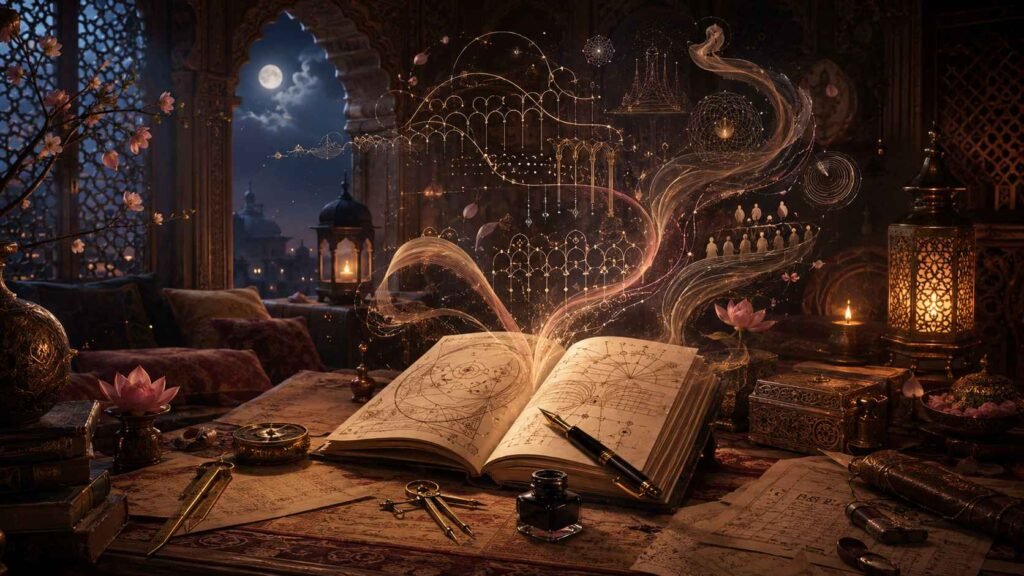
The Art Behind the Verse
Poetry may begin with emotion, but giving that emotion the right form requires an understanding of language, rhythm, structure and technique.
Welcome to The Craft, a space dedicated to discovering the art and technique behind ghazals, nazms, geet, free verse and other forms of poetry.
Here, poetry is explored not only as something to feel, but also as something carefully constructed—where every word, pause, rhyme and rhythm can contribute to the final expression.
Understanding the Language of Poetry
A powerful poem often feels effortless when it is read or heard, yet many poetic forms are built upon distinct structural principles.
Some follow strict patterns of metre and rhyme. Others allow the poet greater freedom. Certain forms develop one continuous thought, while others are made of individual couplets capable of standing independently.
Understanding these differences helps us appreciate not only what a poem says, but also how it creates its effect.
The Ghazal
The ghazal is one of the most distinctive and disciplined forms of poetry associated with the Hindi and Urdu literary tradition, while also having a significant presence in Marathi poetry.
A ghazal is generally composed of individual couplets called shers. Each sher can express a complete thought on its own while remaining connected to the larger musical and structural identity of the ghazal.
The craft of a ghazal is shaped by important elements such as behr, qaafiya and radif.
Sher
A sher is a two-line poetic unit within a ghazal.
Although it belongs to the complete ghazal, a well-constructed sher can often stand independently and communicate its own emotion, observation or idea.
This gives the ghazal its remarkable ability to move across different shades of thought while maintaining one poetic structure.
Behr — The Metre
Behr refers to the metrical pattern or rhythmic framework of a ghazal.
It determines the measured flow of the lines and helps maintain consistency throughout the composition.
The words may change from one sher to another, but the underlying metrical discipline remains important.
When a ghazal is recited aloud, this structure contributes significantly to its musical character.
Qaafiya — The Rhyming Pattern
Qaafiya is the recurring rhyme that appears before the radif.
It gives the ghazal an identifiable sound pattern and creates anticipation for the listener or reader.
Selecting an effective qaafiya is an important part of composing a ghazal because the rhyme must support the meaning of the verse rather than forcing the poet into unnatural language.
Radif — The Refrain
Radif is the repeated word or phrase appearing after the qaafiya in the relevant lines of a ghazal.
Its repetition creates continuity and musicality.
Because the same radif returns throughout the ghazal, the poet must find new ways to lead into it while preserving the individuality of each sher.
This balance between repetition and originality is one of the fascinating challenges of the form.
Matla — The Opening Couplet
The opening sher of a traditional ghazal is known as the matla.
In the matla, the rhyme and refrain pattern is established so that the reader or listener understands the musical structure that will guide the rest of the ghazal.
It acts as the formal entrance into the composition.
Maqta — The Signature Couplet
The concluding sher of a ghazal may be known as the maqta.
Traditionally, the poet may incorporate a takhallus, or pen name, within this sher.
For Dr. Aditya Pethe’s Hindi and Urdu literary identity, the takhallus is Surkhbaaz (सुर्ख़बाज).
The use of a takhallus allows the poet to enter the poem almost as a character, creating a distinctive relationship between the writer and the verse.
The Nazm
Unlike the ghazal, where individual shers can often express independent thoughts, a nazm generally develops a more continuous idea, theme, experience or narrative.
Its lines work together to build a unified expression.
A nazm may explore subjects such as relationships, memories, society, nature, personal reflection or any other theme that develops progressively through the poem.
This continuity gives the poet room to expand an idea rather than resolving it within a single couplet.
Geet — Poetry With a Natural Musicality
A geet places strong emphasis on lyrical flow and musical expression.
Rhythm, repetition and melody often play an important role in shaping the experience of the poem.
Because of its inherently lyrical quality, a geet can create a natural bridge between written poetry and musical composition.
It demonstrates how closely the worlds of words and music can interact.
Free Verse
Not every poem needs to follow a fixed metre, rhyme scheme or traditional structure.
Free verse gives the poet greater freedom to determine the length of lines, rhythm, pauses and overall movement of the poem according to the needs of the expression.
But freedom from a fixed structure does not mean the absence of craft.
Word choice, imagery, pacing, sound and line breaks become especially important because the poet is creating the poem’s internal rhythm rather than following a predetermined pattern.
The Importance of Rhythm
Poetry is not only meant to be understood; it is also meant to be heard.
Even when a poem is read silently, rhythm influences the way the words move through the mind.
A pause can create anticipation.
A repeated sound can strengthen emotion.
A change in pace can completely alter the impact of a line.
This is why recitation is such an important part of experiencing many poetic forms, particularly ghazals and lyrical poetry.
Choosing the Right Word
In poetry, a single word can carry enormous weight.
A poet must often choose between several words that appear to have similar meanings but create completely different emotional effects.
The sound of a word, its cultural associations, its position within the line and the image it creates can all influence the final verse.
The craft lies in finding the word that feels inevitable—as though no other word could have occupied that place.
Imagery and Metaphor
Poetry often communicates through images rather than direct explanation.
A road may represent a journey through life.
Rain may become memory.
Silence may express separation.
A lotus rising from the mud may become a symbol of resilience and hope.
Through metaphor and imagery, poetry allows a familiar object or experience to carry a deeper emotional meaning.
Emotion and Technique
Technical knowledge alone does not create memorable poetry.
At the same time, emotion without careful expression may not always reach the reader with the desired clarity or impact.
The craft of poetry exists in the balance between the two.
Emotion gives the poem its reason to exist.
Technique gives that emotion a form.
When the two work together, a verse can feel spontaneous while still carrying rhythm, structure and precision.
Writing Across Languages
Hindi, Urdu and Marathi each bring their own rhythm, vocabulary and literary character to poetic expression.
For Hindi and Urdu creations, Dr. Aditya Pethe writes under the takhallus Surkhbaaz (सुर्ख़बाज).
His Marathi ghazals carry the pen name Pankeruh (पंकेरूह).
Moving between these literary worlds allows different languages to shape emotion in different ways while preserving poetry’s central purpose—creating a meaningful connection between writer and reader.
Poetry Is Learned by Reading, Listening and Writing
Understanding poetic terminology is only the beginning.
The deeper appreciation of poetry develops through repeatedly engaging with it.
Read different poets.
Listen to recitations.
Observe rhythm.
Notice how a sher is constructed.
Look for the qaafiya and radif in a ghazal.
Pay attention to where a poem pauses and where it moves quickly.
Most importantly, continue writing.
The craft gradually becomes clearer when theory meets practice.
Explore the Fundamentals of Poetry
The Craft is an evolving space for readers and poetry enthusiasts who want to understand what happens beneath the surface of a verse.
From the disciplined architecture of the ghazal to the freedom of free verse, every poetic form offers a different way of transforming thought and emotion into language.
Learn the structure.
Listen to the rhythm.
Understand the technique.
And then return to the poem with a deeper appreciation of the artistry behind every line.